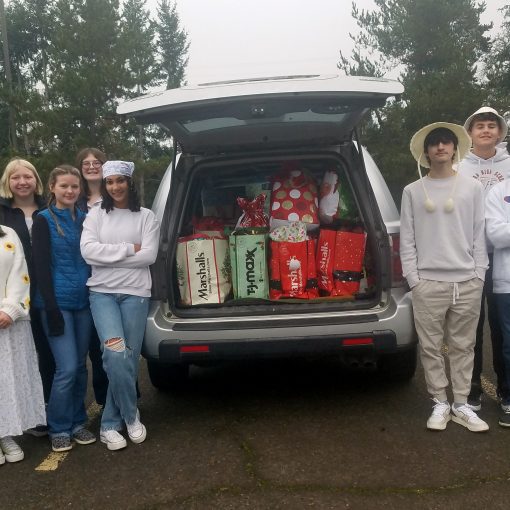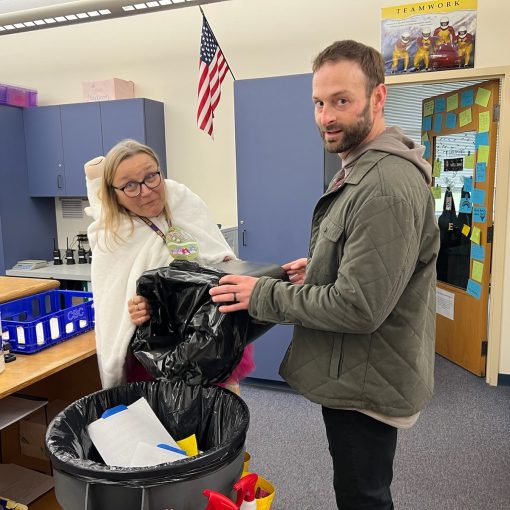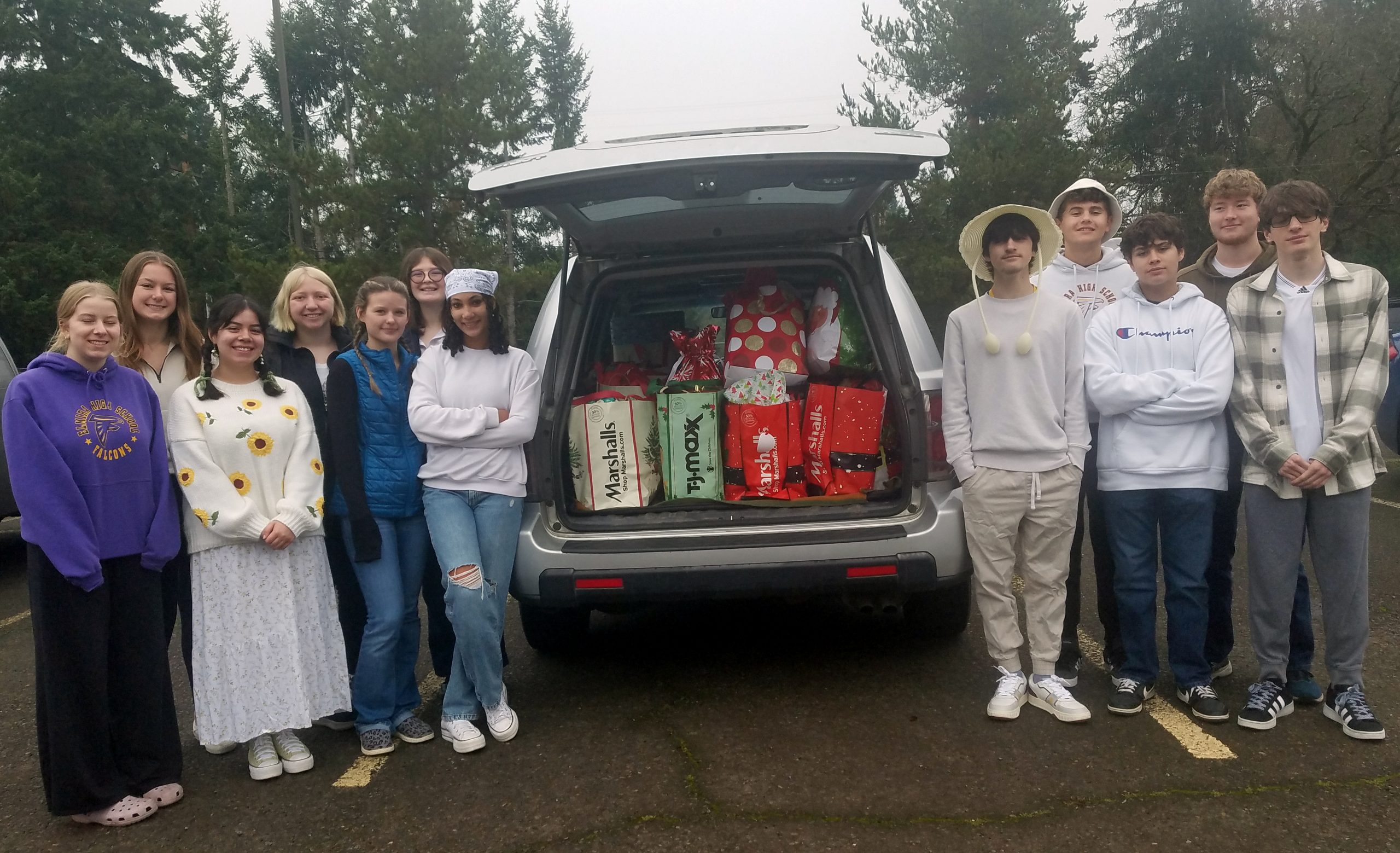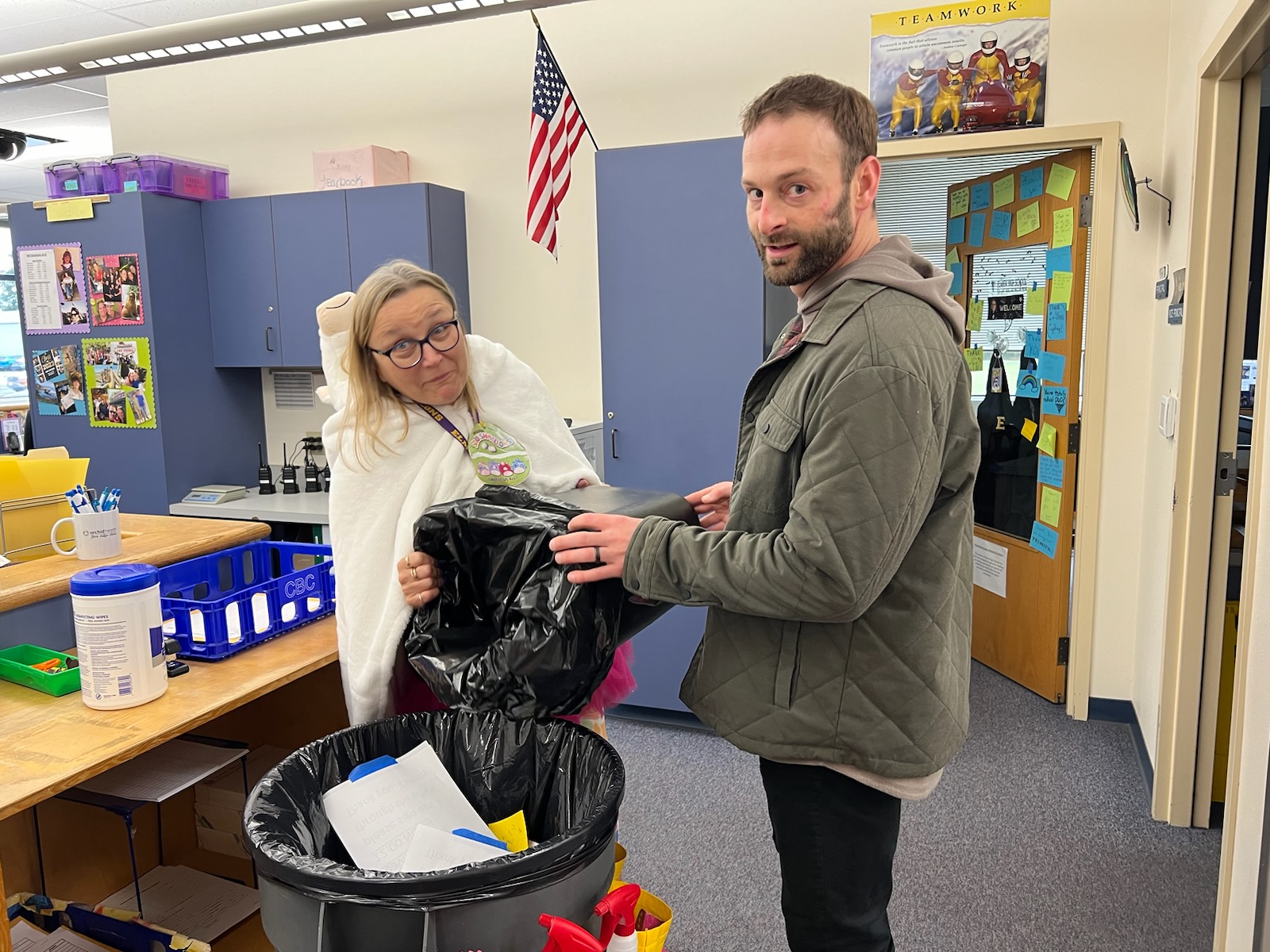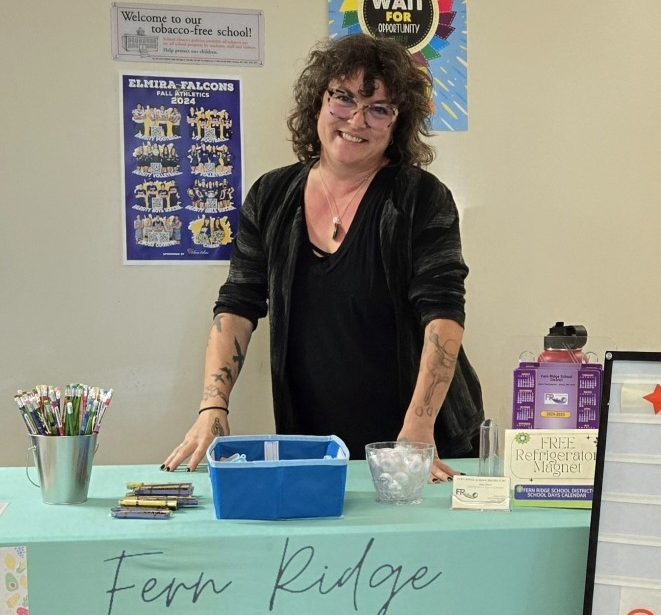
In schools, success is often measured in grades, test scores and graduation rates. Less visible are the basic needs that make those successes possible. In the Fern Ridge School District, family resource support coordinator Amy Hand works quietly to meet those needs, ensuring that students have the basic necessities to be successful as well as access to community support long before they even enter the classroom.
Hand’s work operates largely behind the scenes, supporting families in accessing community resources and navigating school life and the district, facilitating translation and interpretation services, and helping address issues around diversity, equity and inclusion.
Her efforts often don’t receive widespread recognition, but for many students and families in the Elmira-Veneta community, she has become one of the most important figures in their daily lives.
Hand said that the path into the role she has for the school district grew naturally out of her desire to work closely with people.
“I have always been in a position where I interact with people, and I enjoy building upon those interactions,” she said.
The ability to build trust has become central to her work. On any given day, Hand may be working inside the free store she created at Elmira High School in September 2022, making phone calls to local service agencies, or meeting with families to help navigate financial hardship. Her responsibilities are wide-ranging, but the goal is simple: Remove the barriers that prevent any students from focusing on their education.
The free store at EHS is one of the most visible parts of Hand’s efforts. It provides students with access to clothing, food, and hygiene items at no cost. While the concept might be simple, the impact runs deep.
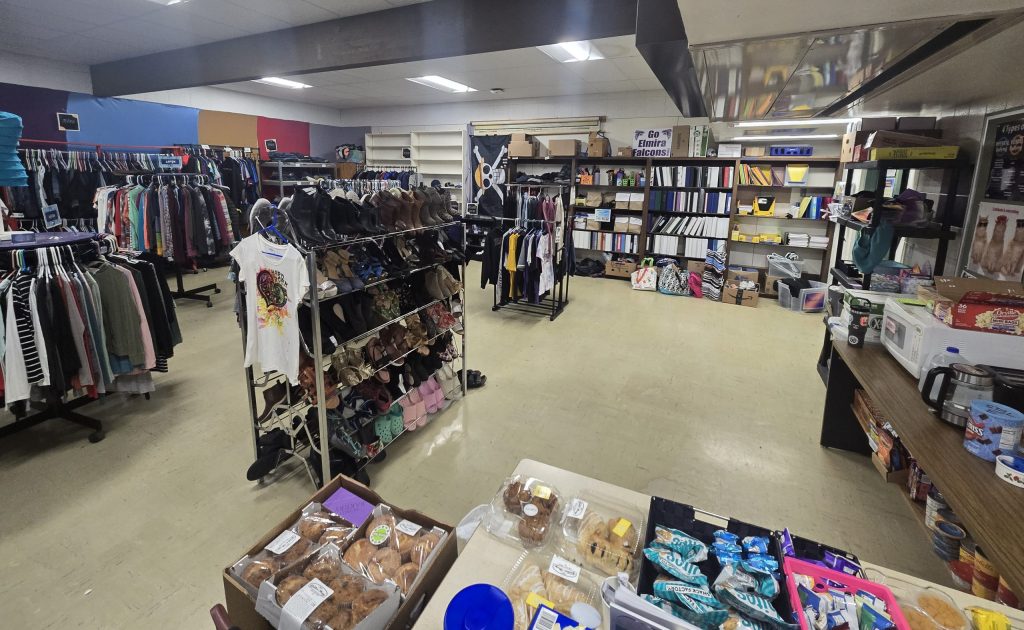
“Most consistently, I see her in the free store opening that up and being available to help out students in the open hours. Behind the scenes, I see her work more directly with students and families that might need extra help. That’s the type of work that is behind the scenes. That work often connects students and families with resources in the community and nearby areas,” said Court Wirth, a counselor at Elmira High School.
Wirth emphasized that the store does more than supply necessities; it changes the culture around asking for help.
“It definitely removes any stigma some people might have with accepting free things or using things. It just makes it very accessible to come in with friends, or come in on their own,” Wirth said, “and as a counselor, there are times outside of the store hours where I can get in there and give kids access to things in the store.”
By normalizing support, Hand has helped create an environment where students do not feel singled out or ashamed. For teenagers especially, that sense of dignity can make the difference between suffering in silence and reaching out.
Much of Hand’s work happens outside of public view. When families or students encounter instability that extends beyond what the school can directly provide, she draws from a network she has made to help them.
“She has spent a lot of time making contacts with nonprofit organizations and service organizations. When a new situation comes up for a student and it’s not something the school is responsible for, she can put us in contact with someone that can help out the family or individual,” Wirth said.
Those connections are not accidental, he said. They are the result of consistent outreach, relationship building and follow-through. In many cases, Hand becomes the bridge between a family in need and the organization equipped to help them.
The work is not without challenges. In recent years, rising costs and funding cuts have placed additional strain on community resources.
“The local food bank lost half of their funding and lacks the needs of our community, and the increase in the costs of items like food and gas is more of a barrier for families, increasing output and decrease of input,” Hand said about the Fern Ridge community.
She said she realizes that many people in the community struggle, but instead of accepting the limitations she looks for solutions. In January 2020, she created a small food pantry outside her home in Eugene. Stocked with canned goods, peanut butter and jelly, socks and other essential items, the pantry operated on a simple principle: Take what you need.
“I got the idea because I live in Eugene where people need more help,” Hand said. “I contacted my friend Jen [Denson] for most of the supplies and put out everything I could give.”
For four and a half years, the pantry remained open and consistently restocked. Though she closed it for personal reasons, Hand continues to volunteer with local organizations that distribute food to those experiencing hardship, such as the Burrito Brigade and Waste to Taste in the Eugene area.
Her service extends beyond meeting immediate human needs. Since 1999, she has served as one of the recycling coordinators for the Oregon Country Fair, reflecting her long-standing commitment to environmental responsibility.
“The environment is very important to me,” Hand said. “Reducing plastic waste and composting minimizes the impact on the world.”
Whether choosing recycling efforts for thousands of fairgoers, providing meals for others, or ensuring students have clean clothes for school, Hand’s approach remains the same: practical and steady, with an unwavering focus on helping others.